SpongeWorks: Building Resilience to Floods and Drought in Wicklow
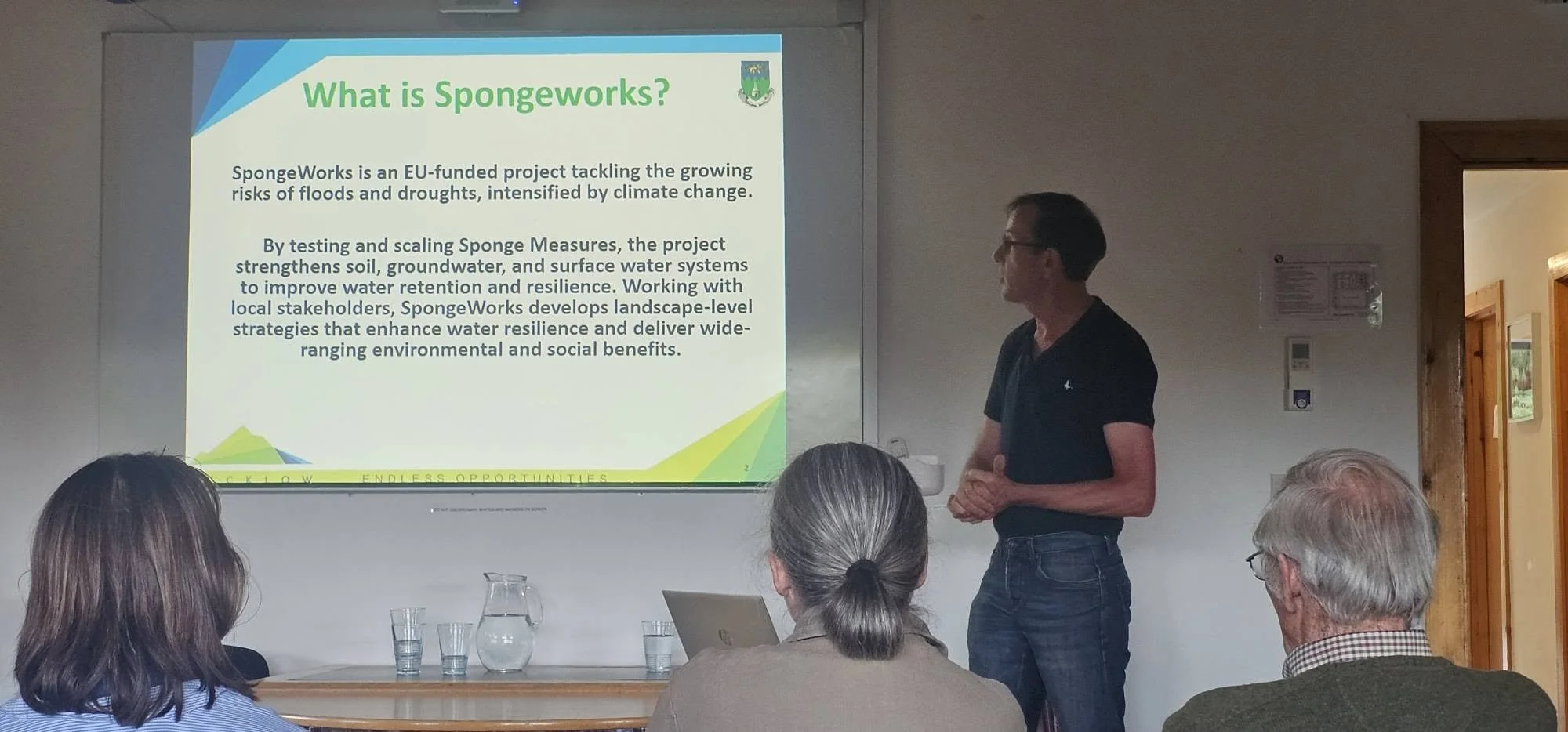
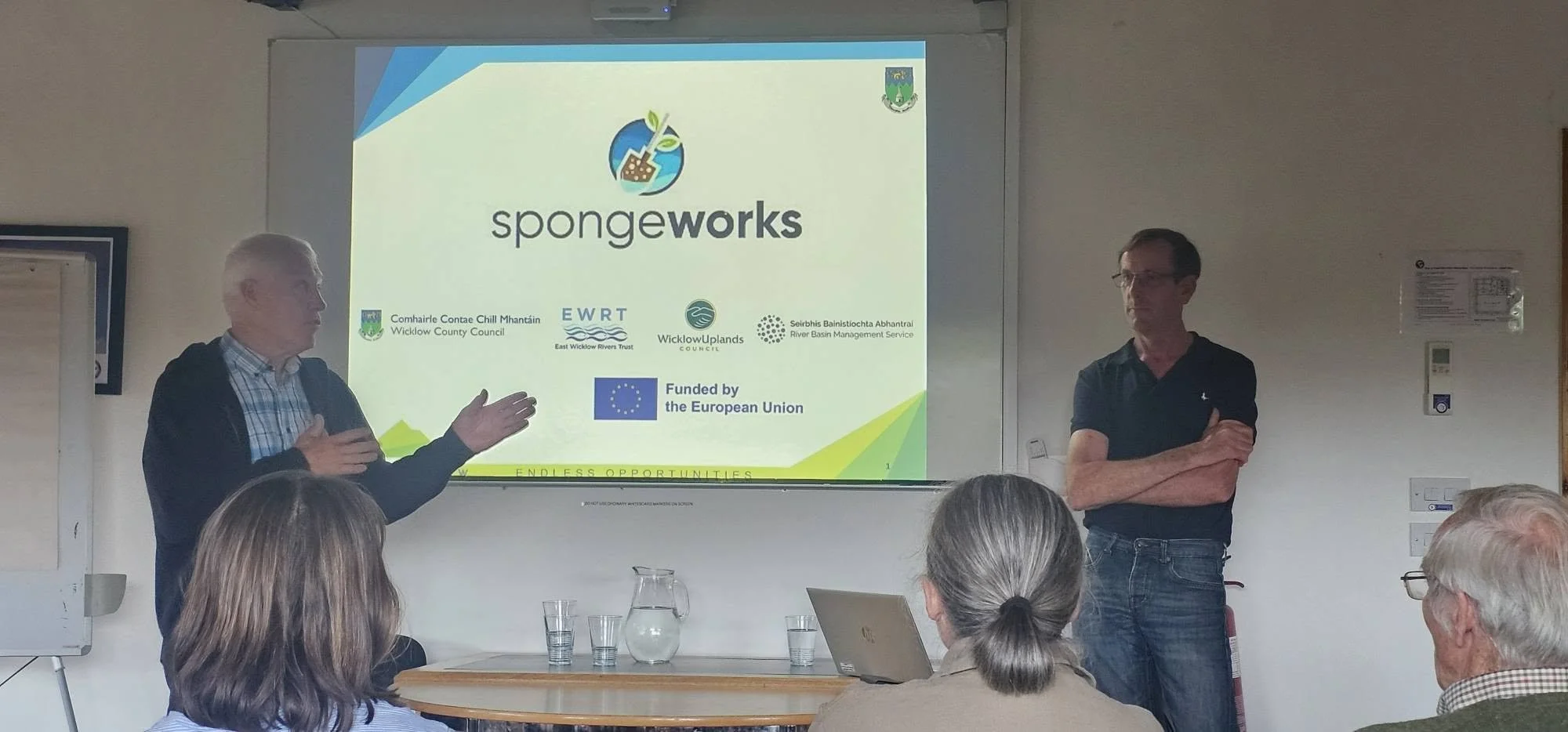
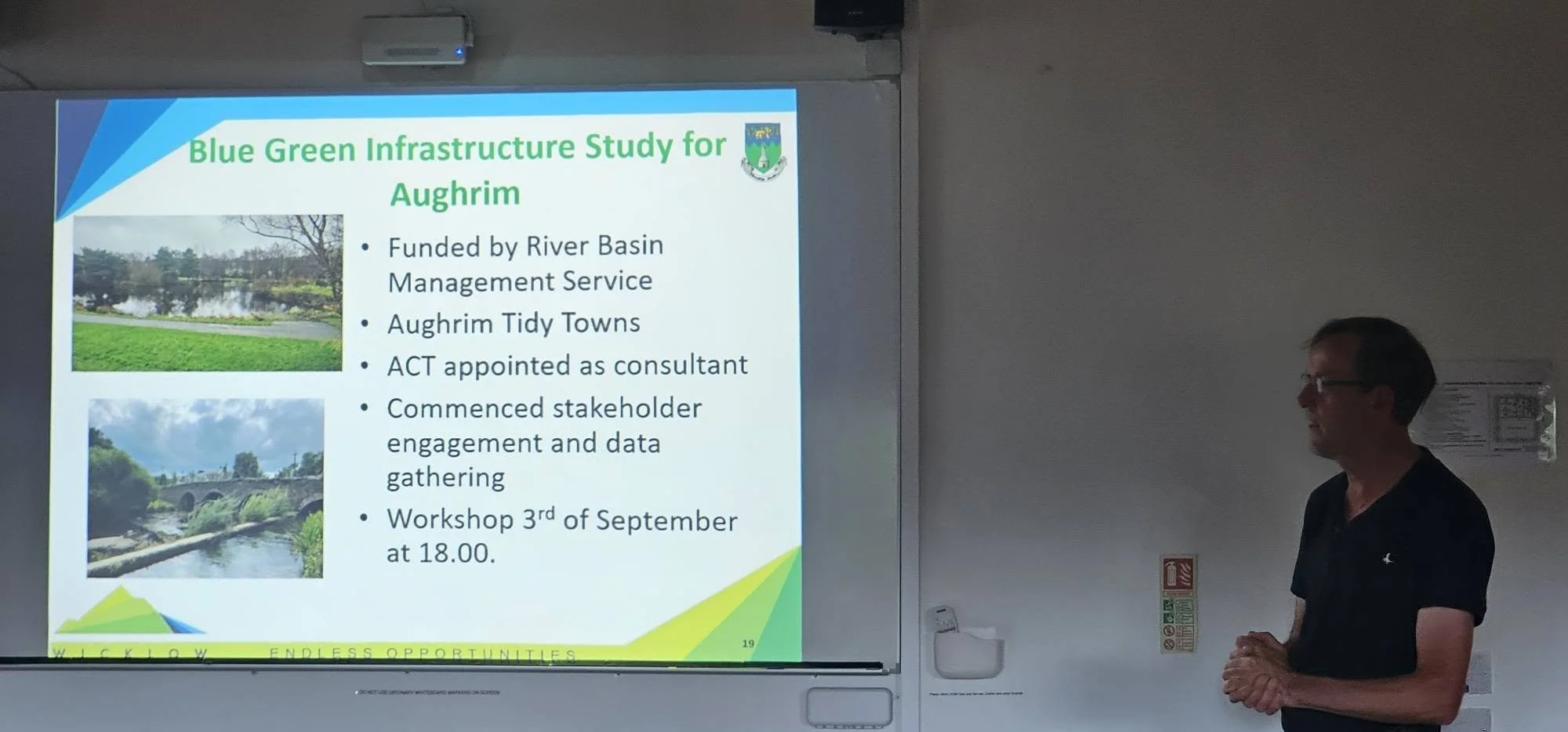
Our SpongeWorks project, delivered in partnership with Wicklow County Council, Wicklow Uplands Council and the River Basin Management Service, was presented last night by Jim Callery as part of the Wicklow Mountains National Park summer lecture series.
The presentation provided an opportunity to introduce the project to an engaged audience and to explore how we can work with the natural landscape to help communities become more resilient to the impacts of a changing climate.
The timing was particularly striking.
We are now around eight weeks into a prolonged period of dry weather, with little grass growth and farmers beginning to use winter fodder to feed livestock. Streams and rivers are responding to the lack of rainfall, and the effects of drought are becoming increasingly visible across the Wicklow landscape.
Yet at the beginning of the year, the situation was very different…
When we launched SpongeWorks in Aughrim, we were dealing with the aftermath of Storm Chandra and significant flooding. Heavy rainfall had brought large volumes of water through the landscape, highlighting the challenges faced by communities living alongside our rivers.
From too much water to too little, the contrast could hardly be greater.
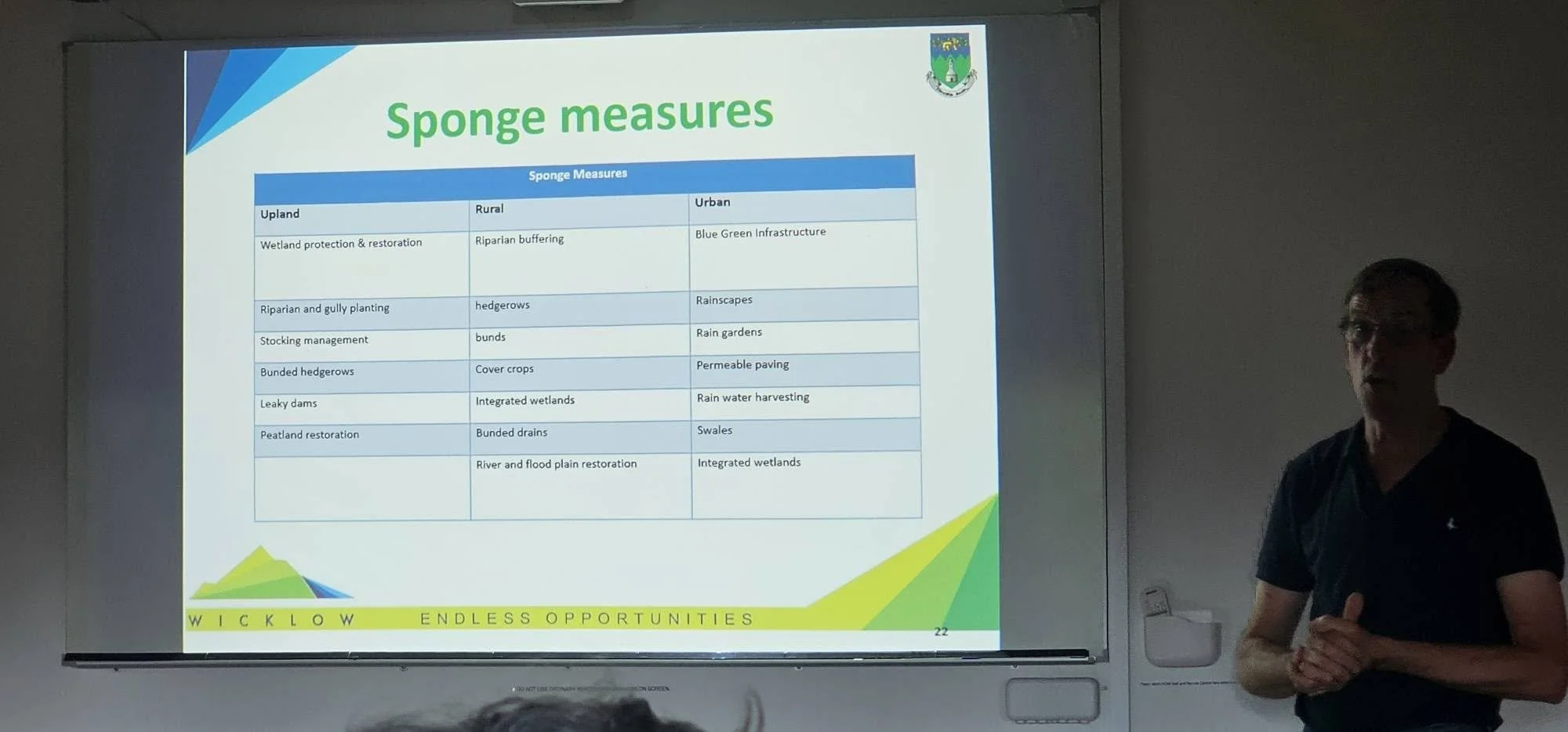
These extremes demonstrate why managing water in our catchments is so important. Healthy soils, wetlands, peatlands, woodlands, hedgerows, rivers and floodplains can all play a role in slowing, storing and filtering water. By working with these natural processes, we can help reduce the impacts of flooding while also improving the landscape’s ability to retain water during dry periods.
This is at the heart of the SpongeWorks approach. Rather than treating flooding and drought as entirely separate problems, the project is exploring how we can make our catchments more resilient by restoring and enhancing the natural processes that help landscapes hold and release water.
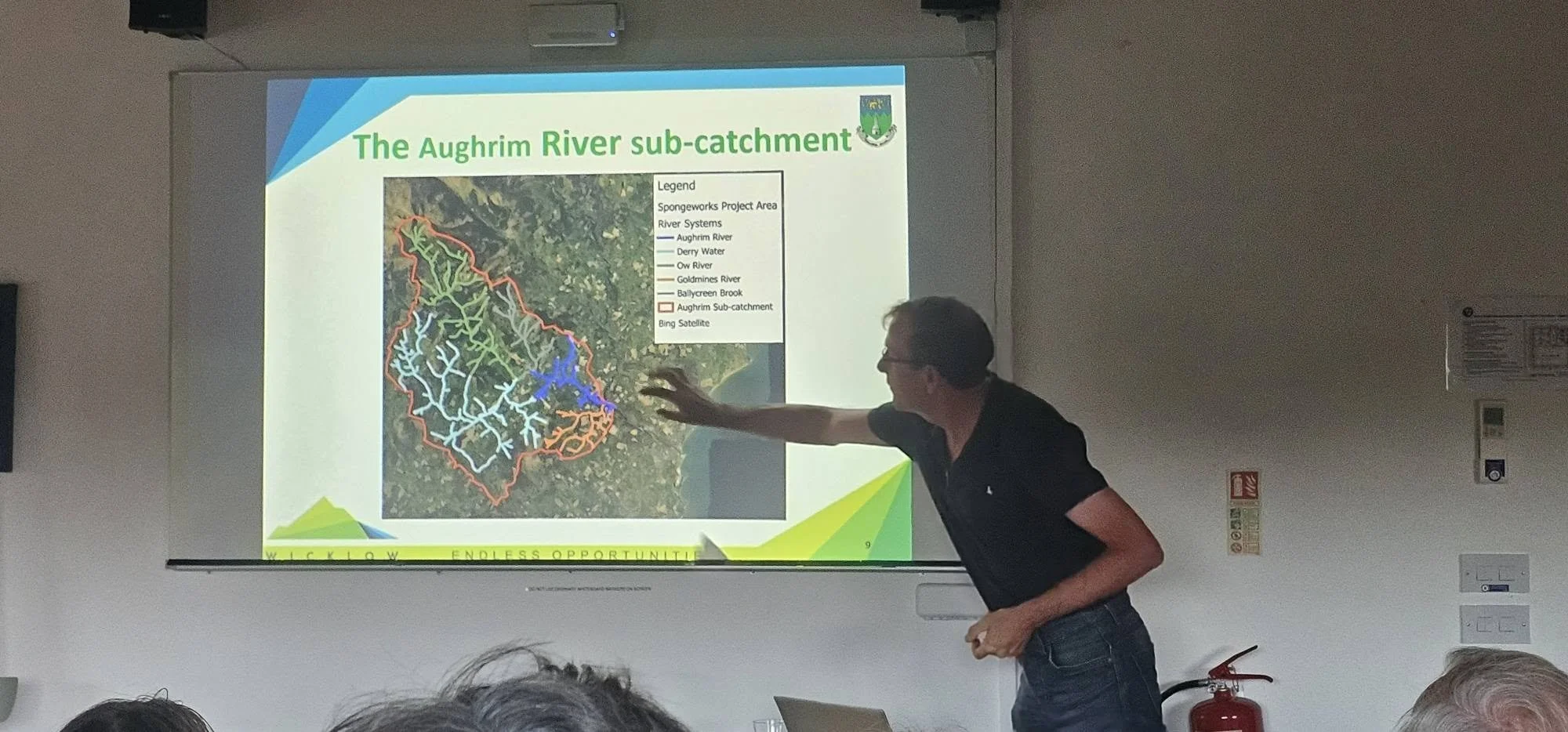
The Wicklow landscape has an important role to play. From the uplands and headwaters of our rivers to the streams, wetlands and floodplains downstream, what happens in one part of a catchment can have consequences much further downstream.
SpongeWorks is bringing partners and communities together to explore practical ways of working with these natural systems. By improving the ability of the landscape to absorb and retain rainfall, we can potentially reduce rapid runoff during heavy rainfall while keeping more water within the catchment for longer.
The presentation at Wicklow Mountains National Park was an opportunity to share this thinking and to discuss the challenges and opportunities ahead.
The contrast between the floods we experienced at the start of the year and the drought conditions we are experiencing now is a powerful reminder that water resilience is not simply about dealing with flooding.
It is about creating landscapes that are better able to cope with both extremes – holding water when there is too much and retaining it when there is too little.
As SpongeWorks progresses, we look forward to working with our partners and local communities to explore what this can look like on the ground across East Wicklow.
SpongeWorks is a collaboration between East Wicklow Rivers Trust, Wicklow County Council, Wicklow Uplands Council and the River Basin Management Service.