

Glensoulan Upland Woodland Restoration
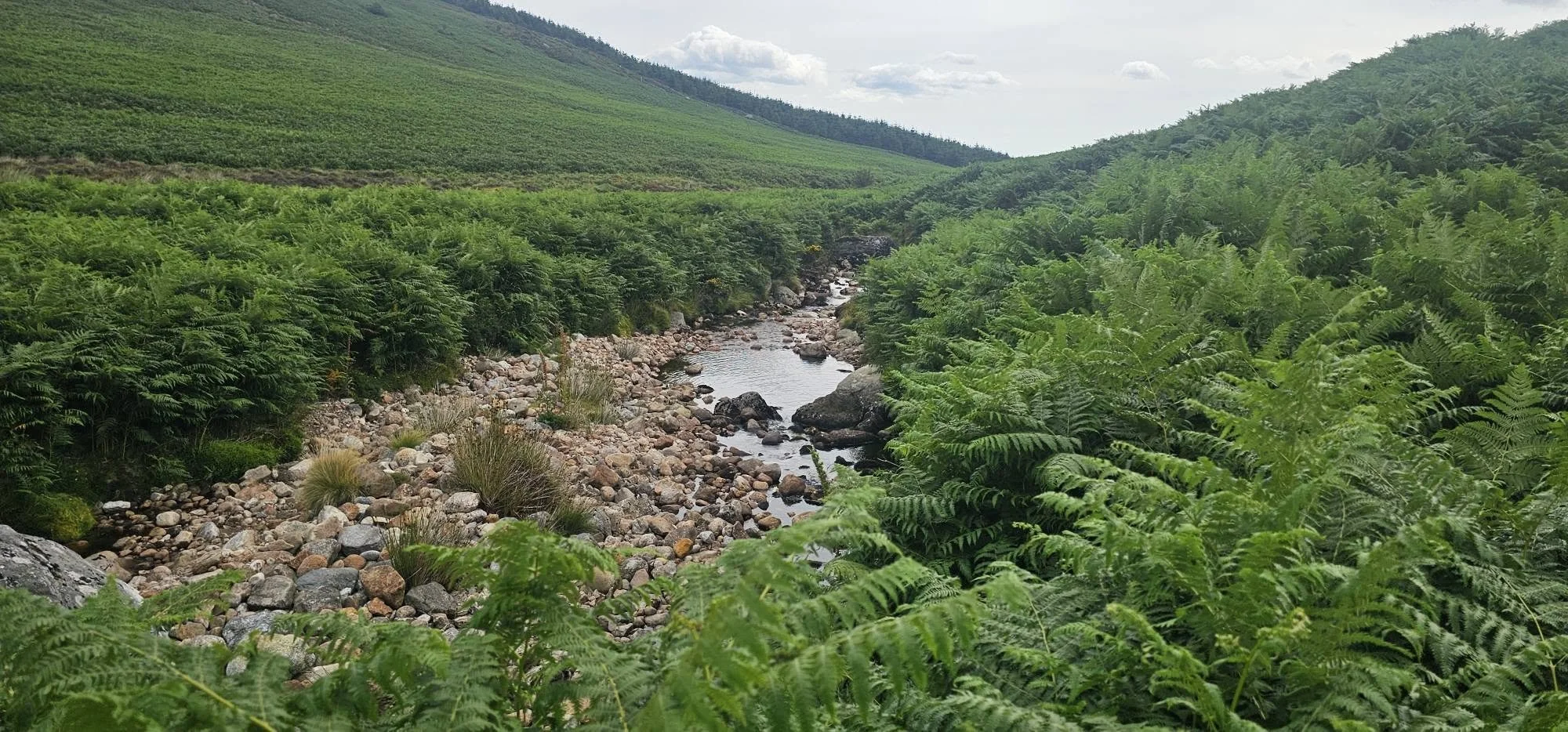
East Wicklow Rivers Trust and Wicklow Uplands Council are delighted to partner with Powerscourt Estate to establish and restore copses of native riparian woodland on the Estate’s land at Glensoulan in the Dargle Catchment. The project is funded by the Peatland and Natura Community Engagement Scheme from the National Parks and Wildlife Service (NPWS).
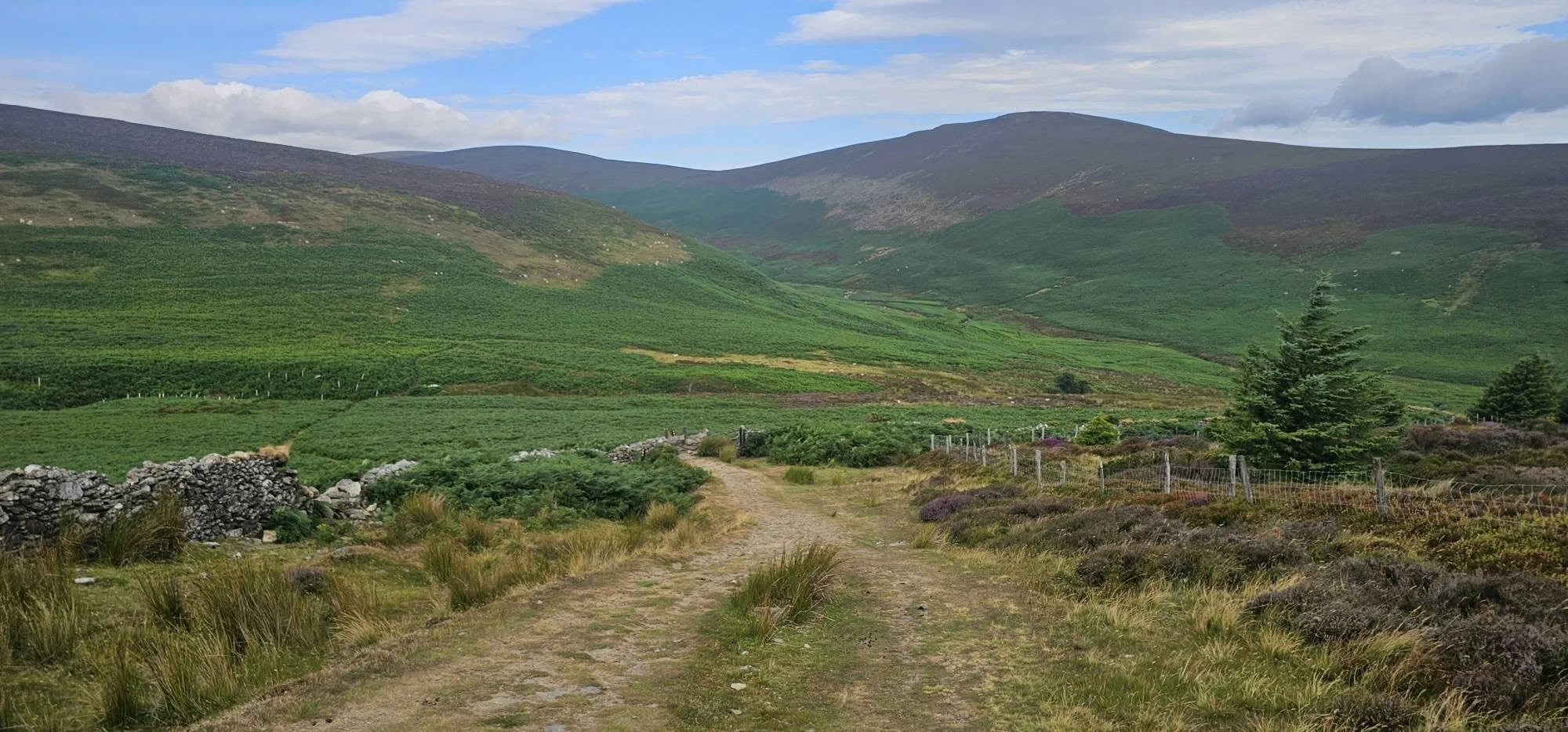
The Glensoulan valley
Glensoulan lies above Powerscourt Waterfall, where the River Dargle drops 121 metres in the highest waterfall in Ireland. The valley is part of a wider upland landscape of significant ecological value.
Like many areas of the Wicklow Mountains, Glensoulan has come under pressure from past land use and drainage. Habitat fragmentation, fires, and overgrazing have added to these pressures.
To help protect the new planting, the new copses will be fenced to exclude deer. In October 2026, fencing materials were flown to the planting sites by helicopter with the support of Wicklow Mountains National Park, and Coillte who provided access through their lands for the road-based part of the journey.
What the planting will do
Glensoulan is part of a wider ecological network in the Wicklow Mountains, where healthy peatlands, native vegetation, waterways and the habitats around them all depend on each other. Restoring woodland here benefits the landscape beyond the planting sites.
Native trees in upland gullies protect the rivers below. Their roots bind stream banks and reduce erosion, while the vegetation slows the flow of water and helps filter it before it reaches streams and rivers. Bankside trees also shade the water in summer. Wooded gullies link habitats so that species can move across the uplands, and they allow native vegetation to regenerate naturally.
Deer grazing has held this back in the area for years. Sika deer, introduced to the Powerscourt deer park in 1880 escaped into the wild - most notably in the 1960s when poachers broke down the park walls. They have since hybridised with native Red Deer so extensively that no pure red deer are thought to remain in Wicklow. By browsing on young shoots and acorns, the deer have stopped native woodland rejuvenating across the area. Fencing the new copses at Glensoulan will protect the young native trees while they establish, and help native vegetation to recover.
Building on earlier work
This project builds on gully woodland work started under the SUAS project and by the National Parks and Wildlife Service, and on our own planting in the Avoca catchment.
From 2018 to 2022, Wicklow Uplands Council ran SUAS, the Sustainable Uplands Agri-environment Scheme. This pilot was funded by the Department of Agriculture under the EIP-AGRI initiative. In 2022, as part of SUAS, hill farmers and their families on the Glassamucky Brakes and Cunard commonages planted Irish-provenance oak, rowan, willow, alder and birch along watercourses and gullies.
Our Upland Gully Woodland Restoration project with Wicklow Uplands Council, supported by Wicklow County Council’s Climate Action Fund, is restoring native woodland in upland gullies in the Avonmore and Avonbeg sub-catchments. In January 2026, volunteers planted over 1,000 Irish-provenance native trees along the Avonbeg River. Now, we’re looking forward to getting more native trees back into Glensoulan.